The information below is obtained from Wikipedia.
The Republic of Singapore, is a sovereign island city-state in Southeast Asia. The country is situated one degree (137 kilometres or 85 miles) north of the equator, at the southern tip of the Malay Peninsula, with Indonesia's Riau Islands to the south and Peninsular Malaysia to the north. Singapore's territory consists of one main island along with 58 other islets. Since independence, extensive land reclamation has increased its total size by 23% (130 square kilometres or 50 square miles).
The city-state is home to 5.6 million residents, 39% of whom are foreign nationals, including permanent residents. There are four official languages of Singapore: English, Malay, Mandarin Chinese, and Tamil; most Singaporeans are bilingual, with English serving as the nation's lingua franca, while Malay is the national language. Nonetheless, only about 10% of the population speaks Malay, with the most commonly spoken language at home being English.[14] Its cultural diversity is reflected in its extensive ethnic cuisine and major festivals.
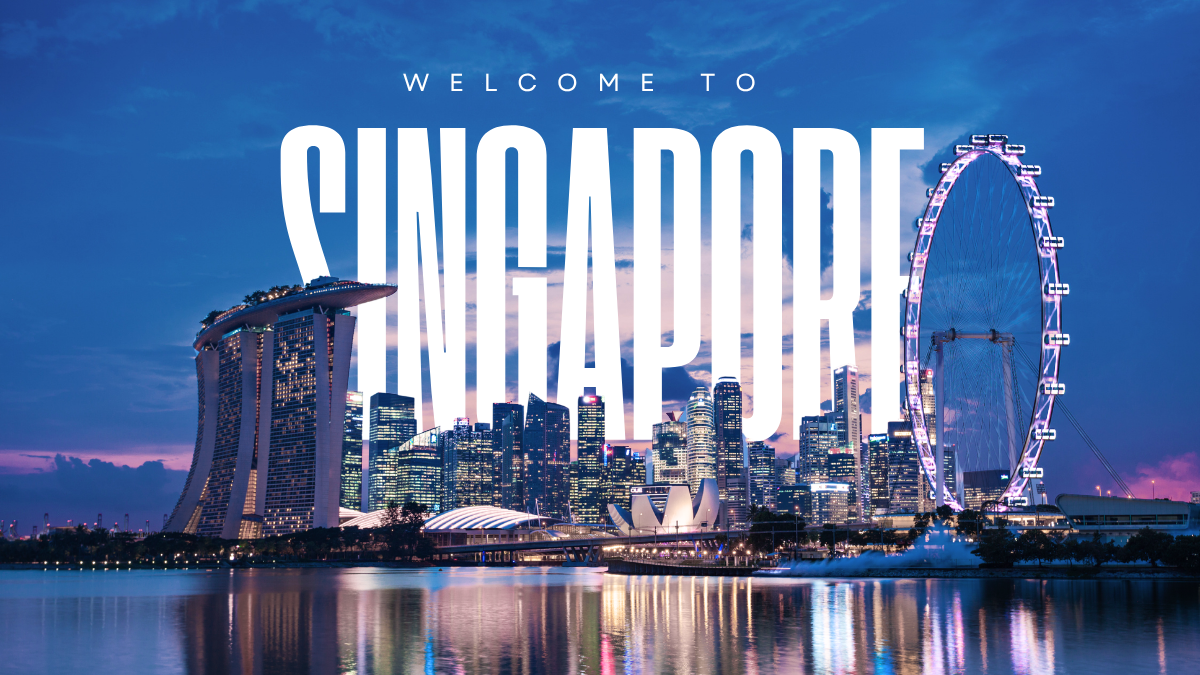
The city-state's historical district features dozens of landmarks such as The Esplanade, Fort Canning Hill, the National Gallery Singapore, Raffles Hotel and the Buddha Tooth Relic Temple. There are also numerous famous attractions within the city-state, notably Gardens by the Bay, Marina Bay Sands, Sentosa Island, Orchard Road, Jewel Changi Airport and the Singapore Zoo, which was ranked the best zoo in Asia.[16] The Singapore Botanic Gardens is the only tropical garden in the world to be honoured as a UNESCO World Heritage Site.
Singapore's tourism also aims to be environmentally friendly, maintaining natural and heritage conservation programs.[296] Along with this, it also has one of the world's lowest crime rates. Transport in Singapore is quite extensive, and is regarded as one of the best overall,[297] making most areas on the island easily accessible. The Mass Rapid Transit (MRT) system is one such example of transport infrastructure.
The Orchard Road district, which is contains multi-storey shopping centres and hotels, can be considered the center of shopping and tourism in Singapore.[298] Other popular tourist attractions include the Singapore Zoo, River Safari and Night Safari. The Singapore Zoo has embraced the open zoo concept whereby animals are kept in enclosures, separated from visitors by hidden dry or wet moats, instead of caging the animals, and the River Safari has 300 species of animals, including numerous endangered species.[299]
A night view of the Supertrees at Gardens by the BayJurong Bird Park is another zoological garden centred on birds, which is dedicated towards exposing the public to as much species and varieties of birds from around the world as possible, including a flock of one thousand flamingos. The tourist island of Sentosa, which attracts 19 million visitors in 2011, is located in the south of Singapore, consisting of about 20–30 landmarks, such as Fort Siloso, which was built as a fortress to defend against the Japanese during World War II.
Other notable tourists attractions in Singapore includes the two integrated resorts which houses casinos, namely Marina Bay Sands and Resorts World Sentosa; Gardens by the Bay and Jewel Changi Airport.
Singapore promotes itself as a medical tourism hub, with about 200,000 foreigners seeking medical care there each year. Singapore medical services aim to serve at least one million foreign patients annually and generate US$3 billion in revenue.[300] In 2015, Lonely Planet and The New York Times listed Singapore as their top and 6th best world destination to visit respectively.[301]