Pedagogy Resources & Insights
This page brings together selected resources, reflections and practical insights for instrumental teachers who wish to deepen their understanding of teaching and continue developing their professional practice.
The materials explore the many dimensions of instrumental pedagogy — from musicianship, lesson planning and teaching strategies to reflective practice, professional development and preparation for teaching diplomas. They are designed to encourage thoughtful, responsive and musically informed teaching, with a strong emphasis on connecting pedagogical understanding with what actually takes place in the lesson.
Resources may include articles, infographics, teaching guides, videos and other materials developed through the work of the Joyeux Music Pedagogy Academy. Stay in touch with us, for more updates!
INFOGRAPHICS
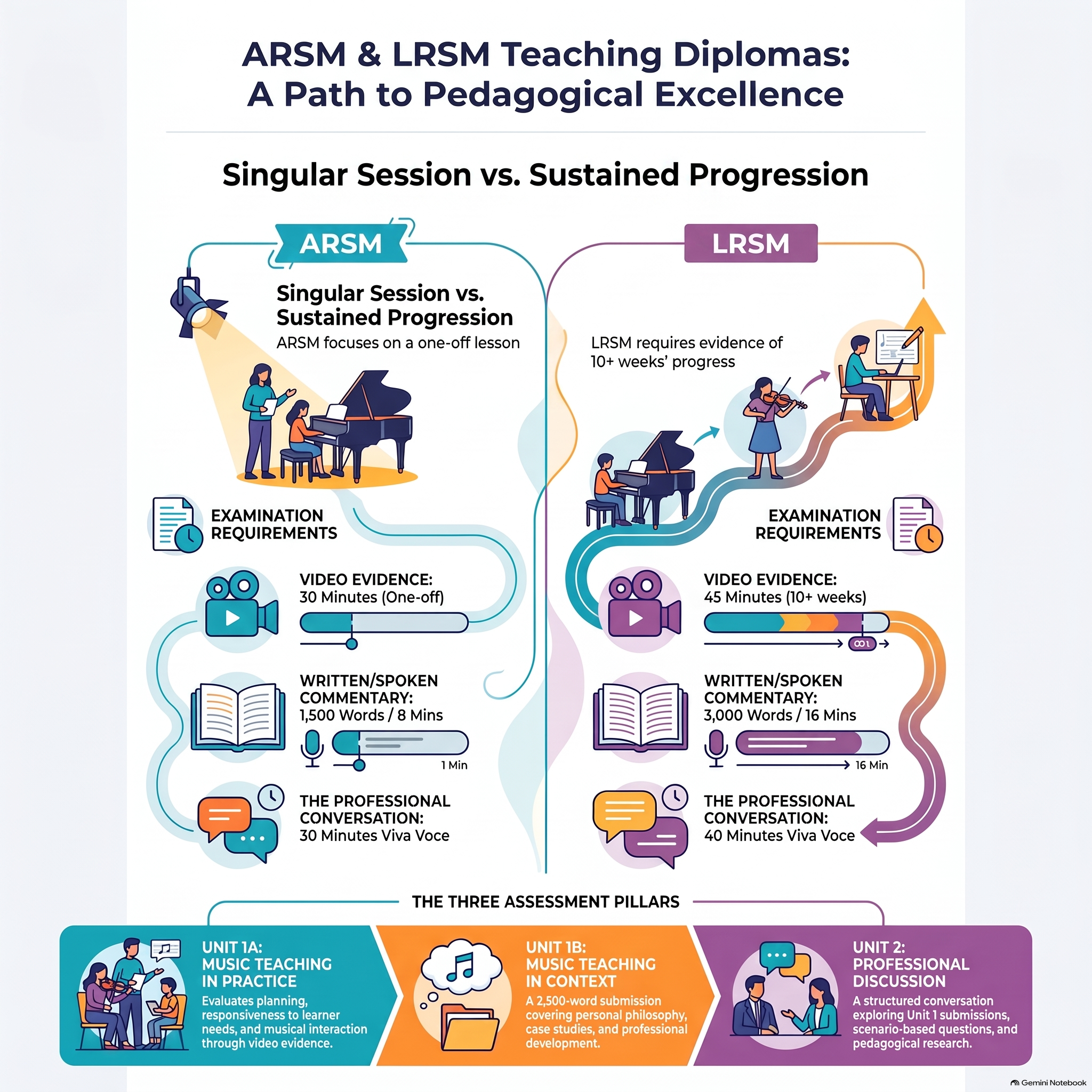
ARSM & LRSM in Comparison
The Joyeux Music Pedagogy Academy provides a structured training programme for teachers preparing for the ARSM and LRSM Teaching Diplomas.
These qualifications require candidates to demonstrate not only practical teaching ability, but also pedagogical understanding, reflective practice and the ability to communicate their professional thinking.
Through recorded teaching, written or spoken commentary and professional discussion, candidates are required to demonstrate how they plan, respond to individual learners, evaluate their teaching and develop as reflective practitioners.
The Joyeux Pedagogy Programme supports this progression through the development of instrumental competency, musicianship, teaching practice, reflective practice and practicum, helping teachers move beyond examination preparation towards a more informed and integrated approach to pedagogy.
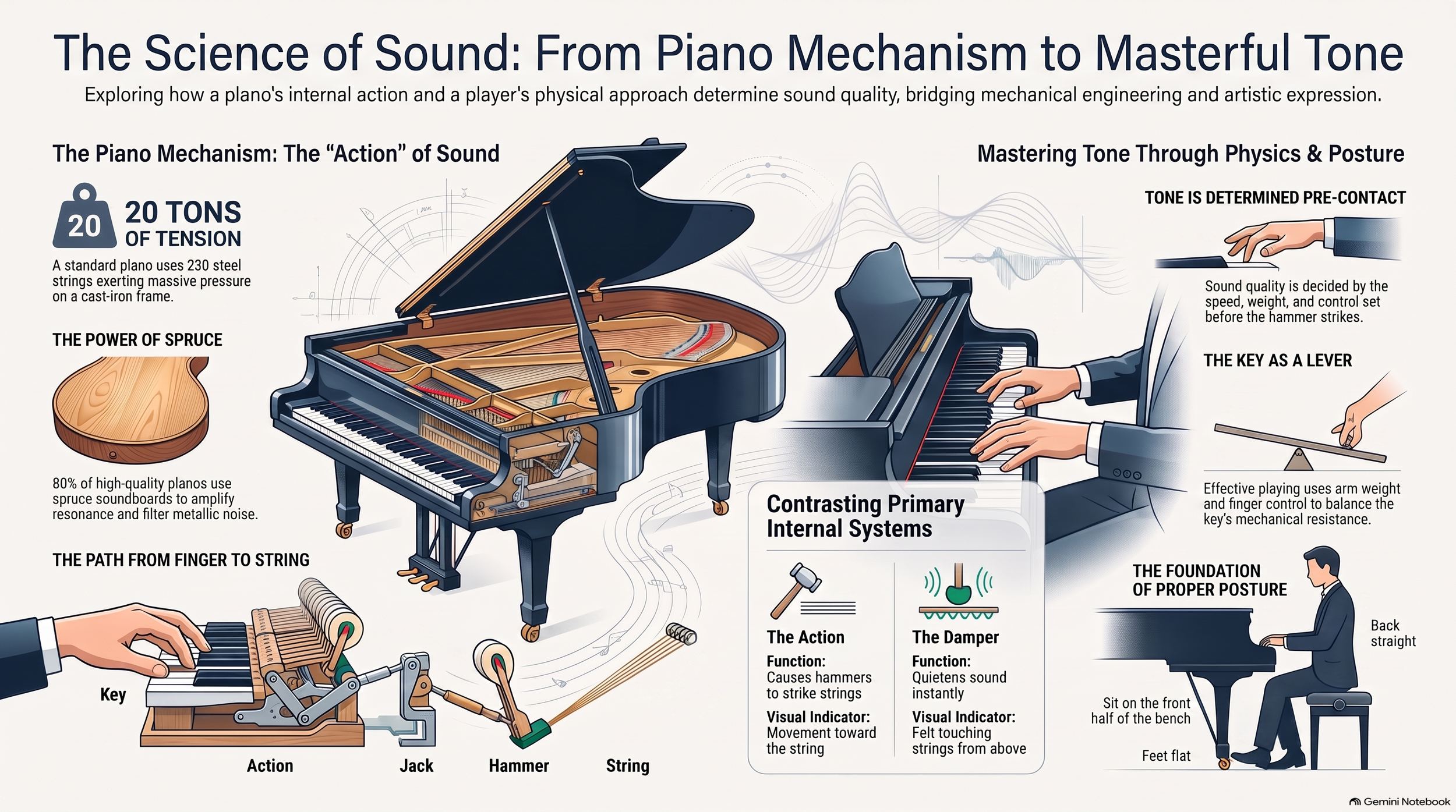
How Piano Mechanism Affects Tone
This resource explores the mechanical design of the piano and its relationship to instrumental technique and pedagogy. It examines how the piano action — including keys, hammers, strings and dampers — transforms the pianist's physical movement into sound.
Understanding this mechanism can help teachers explain more clearly how touch influences hammer velocity, dynamics, articulation and tonal control. Rather than relying on physical effort alone, effective piano playing involves coordination, balance and an efficient use of the fingers, hand, arm and body.
Posture therefore plays an important role. A balanced sitting position, relaxed shoulders and freedom of movement allow arm weight and muscular activity to be used efficiently without unnecessary tension.
Ultimately, an understanding of the instrument's mechanics should serve a musical purpose: helping students develop greater control of touch, sensitivity to sound and, above all, the ability to listen critically to the sound they produce.